Waterproof vs quick-drying, and what a Gujarat monsoon asks of a shoe
Posted by Fanture, Surat, Gujarat. Who that is
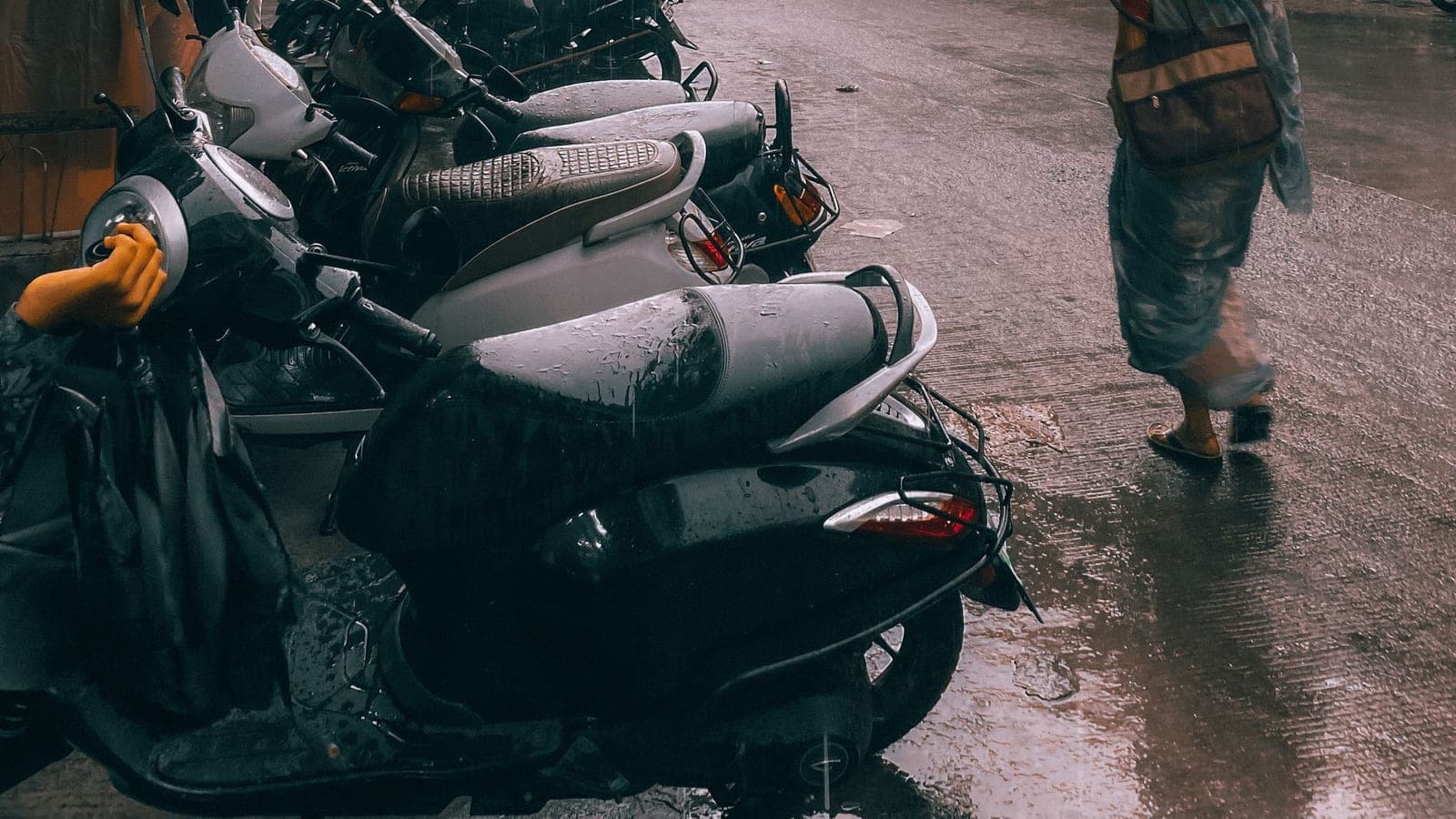
Waterproof and quick-drying sound like the same promise. They are not. Waterproof means water cannot get inside the shoe. Quick-drying means the water sitting on the outside leaves fast enough that you are not pulling on a cold, heavy shoe the next morning. A monsoon needs both, because rain here does not arrive once and stop, it arrives every day for weeks, and your footwear never gets a dry night in between. A Fanture pair does both for one reason: it is a single moulded piece of foam, with no fabric, no lining, no insole glued in and no seam for water to hide in. Rinse it under a tap, shake it out, put it back on. What catches people is not the rain. It is what they do to the pair afterwards: hot water and a sunny terrace do more damage in one afternoon than the whole season did.
Waterproof and quick-drying are two different things
A shoe can be one without the other, and most wet-weather footwear is.
Waterproof is about the barrier. If the outer material does not let water through, your foot stays dry while you cross a flooded lane. That is the property every rainy-season shoe advertises.
Quick-drying is about what happens next, and construction decides it rather than the barrier. Fabric holds water in the weave. Foam padding under a lining behaves like a sponge and gives the water back slowly. Glued layers wick along the join where two materials meet, so a shoe stays damp in places you cannot reach with a towel. It is purely a question of how many places there are inside the shoe for water to sit.
In a dry month you can survive with only one of the two. The shoe gets wet, it dries overnight, nobody thinks about it. During the monsoon there is no overnight: the shoe you wore home in the rain is the shoe you need at seven the next morning.
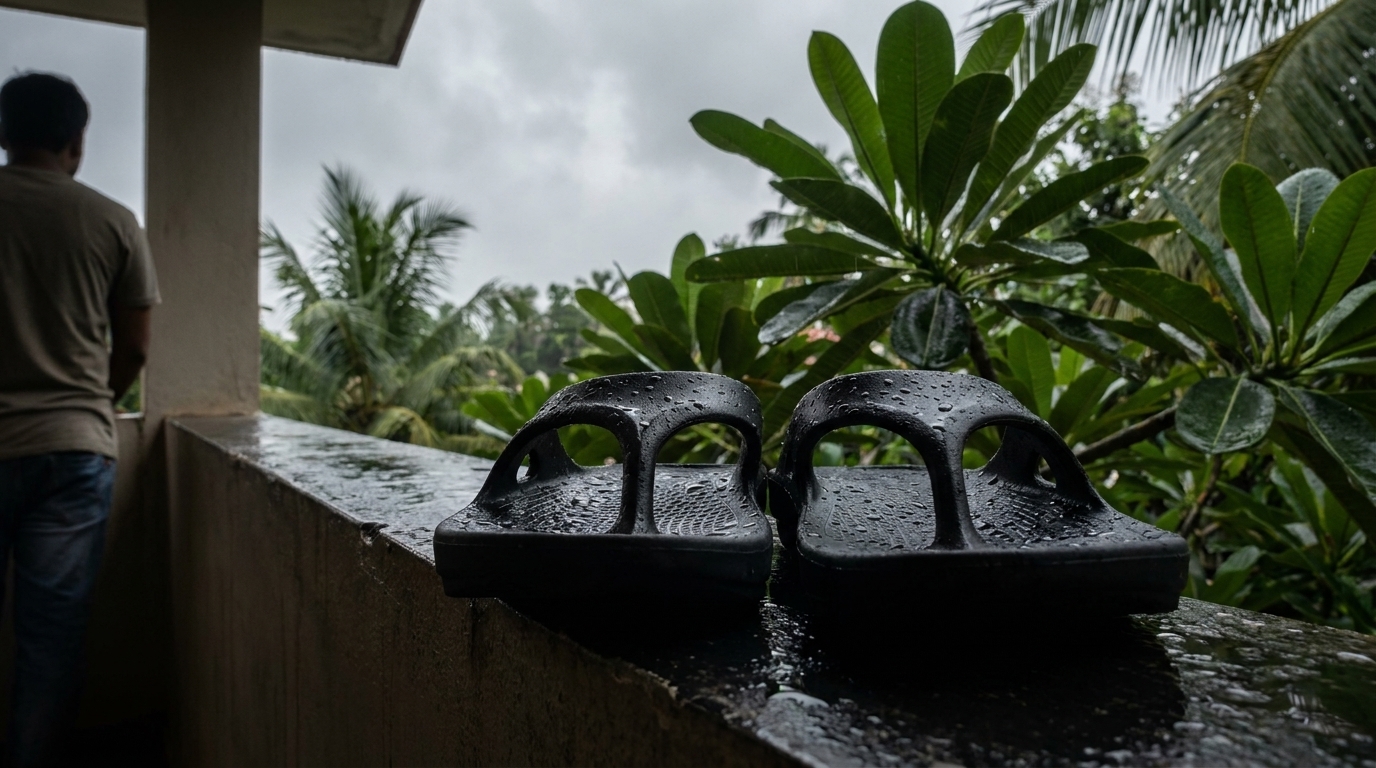
There is nothing inside a Fanture pair for water to get into
Each of the five styles is one moulded piece. The footbed, the CloudFoam™ sole and the outsole are identical across all of them, and the only thing that changes between an Ultimate and a Halo is the upper. No textile lining. No removable insole. No sockliner. No glue seam between an upper and a sole, because the upper and the sole are the same piece of foam.
That is the entire waterproof story, and it happens to be the entire quick-drying story as well. Water cannot get into the shoe because the shoe does not have an inside. Whatever is on it is on the surface, and a surface dries. Hold the pair under a running tap, shake it hard, and most of the water has already left.
It is also why a wet pair still feels like nothing. A shoe is roughly 120 g at EU 42, that is the only size we have actually put on a scale, so it is the only one we will quote you, and a soaked one weighs close to the same, because there is no material in it that can absorb water and carry it around. Anyone who has walked home in wet canvas knows what the other version feels like.
What the outsole is doing on a wet floor
Being waterproof does nothing for you if you go down in a shop doorway. The real monsoon hazard is not the rain outside; it is the tile just inside the door after everyone has walked in wet.
What makes a wet floor slippery is a film of water trapped between the sole and the tile. If the sole is flat and that water has nowhere to go, the shoe skates on the film. The geometric pattern on a Fanture outsole has channels cut through it, so water has a route out from under the shoe rather than staying under it. The Halo clog, the one closed style, is drilled through the upper on the same principle: a spill or a wet step drains away instead of pooling around your foot.
There is a maintenance point hiding in that. Those channels are where your grip on a wet floor actually lives, and they clog with grit before anything else on the shoe does. A blocked channel is just a flat sole.
Which of the five styles for a wet season
All five handle water identically, so choose by what you want on your foot rather than by drainage.
- Ultimate and Ardour are toe-post flip flops, open on every side. The least shoe of the five, and therefore the least of anything for water to sit on.
- Aroma Pro and Adventure are single-strap slides with no toe post. The same open construction, for anyone who does not want something between their toes, including people who wear a pair over socks on a cold wet floor indoors.
- Halo is the closed-toe clog, drilled for drainage. Pick it if you want the top of your foot covered on a floor where things get dropped and spilled.
Every style is priced the same and sits on the same footbed and the same foam, so the choice really is only about the upper. If you would rather answer four questions than read five descriptions, the fit quiz does it, and the full range is here.
The mistake that ruins a pair after the rain stops
Now the limit, and it is the sentence on this site worth reading twice. CloudFoam is heat-sensitive. Water at any sensible temperature does nothing to it. Heat deforms it, permanently. Two versions of this bite people during a monsoon and just after one.
The first is hot water. The pair is completely waterproof, which makes it look washable at any temperature, so out comes a bucket off the geyser or a hot cycle in the machine after a week of street water. The water is not the problem. The temperature is. Rinse cold or lukewarm, with mild soap if they need it.
The second is drying them in the sun. In the first clear spell after the rain everything in the house goes up to the terrace, and the shoes go up with it. The surface of the foam shrinks faster than the core, the sole curls, and the footbed loses the contour it was moulded with. That contour is the reason the shoe does anything for your feet. A closed car does the same damage, and so does a room heater, a hair dryer or a tumble dryer on any setting.
We would rather say this at full volume than in a warranty clause: heat damage is not covered. Returns are defect-only, a manufacturing defect, damage on arrival, or the wrong item, within seven days, and a curled sole off a terrace is none of those. We chose a foam soft enough to be worth something at hour nine on a hard floor, and a foam that soft gives way in heat. That trade is ours, and warning you before you buy is the only honest way to make it. The technology page has the rest of it.
How to rinse a pair in the middle of the monsoon
- Rinse under a cold or lukewarm tap. A little mild soap if the week has been rough on them.
- Run a soft brush through the tread channels. That is where the wet-floor grip lives and it is the first thing to clog.
- Shake the water out properly. On the Halo, shake it through the drainage holes.
- Stand them indoors, out of direct light, somewhere with air moving. Nothing else. No dryer, no heater, no sunny windowsill.
They are quick-drying already, which is the point of all of this. Sun buys you no time worth having and costs you the pair.
Who this actually matters to
The person who feels the difference is not the one caught in a downpour once. It is the one working a full shift indoors on a floor that stays wet from June until the rain stops in September, a hospital corridor, or a shop or restaurant floor where the mopping never quite catches up. If you are already doing a long shift on your feet, the wet is only half of what you are standing in.
Standing still is the harder case for a foot, wet floor or dry. Walking unloads each foot every step; standing holds the same two spots under load for hours, and a flat sole leaves the arch spanning air, so the heel and the ball carry what the arch is not. Pressure is force divided by area, so a footbed that makes contact along the arch spreads the same body weight over more of the foot and lowers the peak where it was highest. The deep heel cup keeps that contour under the right part of the foot instead of letting the heel drift off it. None of that is about water. The waterproofing is what lets you have it on a wet floor all season without buying a second pair.
Common questions
Can I wear a pair in the rain and then walk straight into work?
Yes, and this is what one-piece construction is for. There is nothing to soak, so the water is only on the surface. Shake the pair out at the door and wipe the tread if you would rather not track grit inside.
Can I put them in the washing machine?
No, not because of the water, but because of the heat and the tumbling. A cold or lukewarm rinse under a tap does the same job, and there is no lining or insole to wash separately. Hot water is one of the four things that deform the foam, and that damage is not covered.
Will they slip on wet tile?
The outsole is a geometric non-slip pattern with channels cut through it so water can escape from under the sole rather than forming a film between the sole and the floor. That is what the design is doing. Keep the channels clear with a soft brush, clogged tread is the one thing that undoes it.
My sole curled after I dried the pair on the terrace. Is that covered?
No, and we would rather tell you here than after you have paid a courier. Heat damage is excluded, and returns cover manufacturing defects, damage on arrival, or the wrong item being sent, within seven days. Air-dry indoors, in shade, every time. It is the rule that decides how long a pair keeps the shape it left the mould in.
The foam is heat-sensitive and that is on every product page above the button. Everything else we can't do is in the guides.