Why heat shrinks foam sandals, and how to wash a pair without ruining it
Posted by Fanture, Surat, Gujarat. Who that is
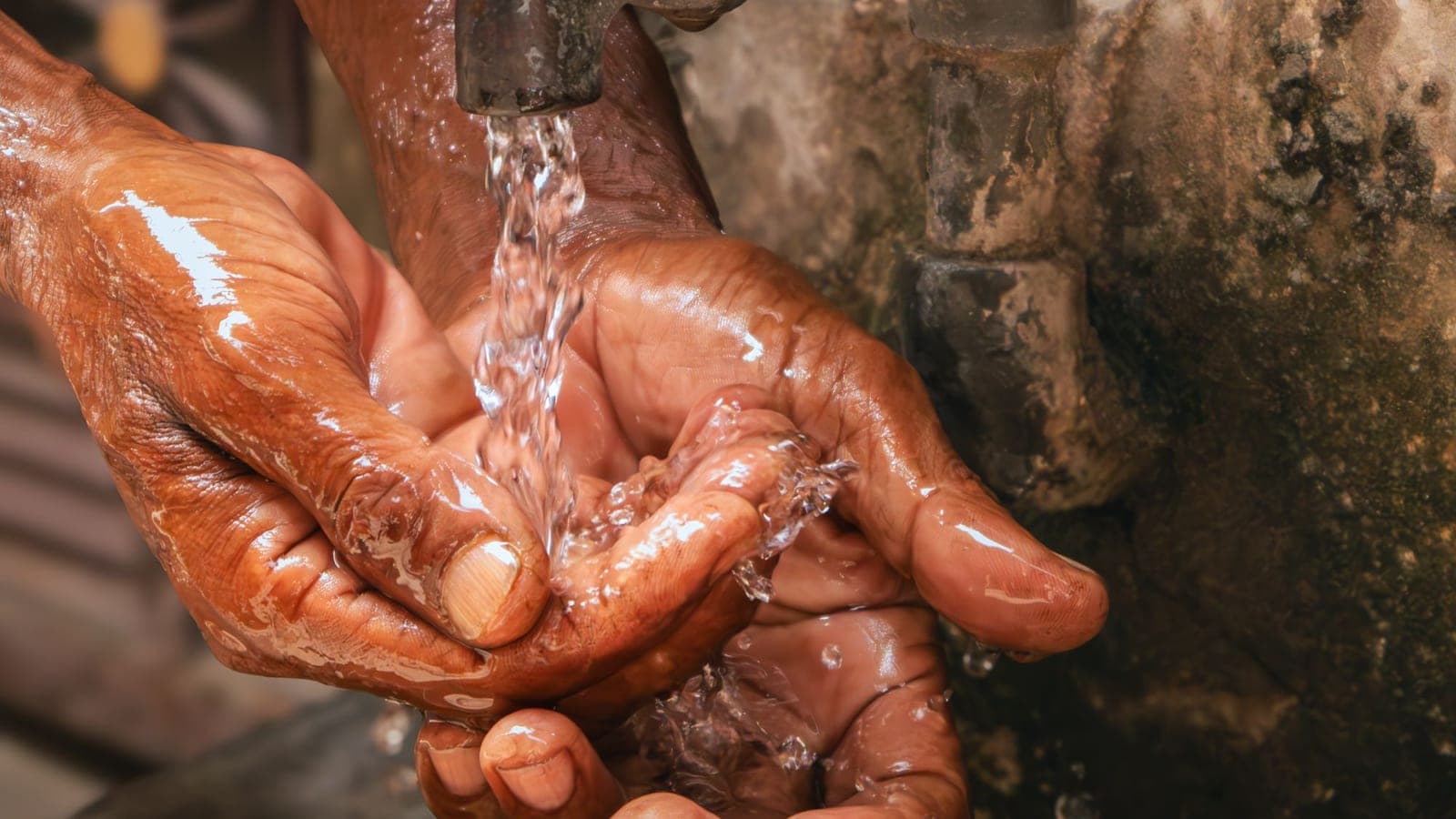
Heat is the only thing that reliably destroys a pair of Fanture. Not water, and not a week of grit packed into the tread. The sole is foam granules fused into a single piece in one mould, and warmth is enough to make those granules shrink and set into a new shape. When that happens the arch contour flattens or the sole curls, and it stays that way. You can't press it back, and we can't replace it, because heat damage isn't covered by our returns. So the whole care routine is this: cold or lukewarm water, mild soap if it needs it, air-dry indoors out of the light. Nothing that blows hot air. Nothing that sits in the sun.
What heat does to a fused-granule sole
The usual way to make a soft sole is to cut and press a sheet of EVA. That is one continuous material. CloudFoam™ is made the other way round: the foam is expanded into granules first and then fused into the shape of the sole, so you are standing on thousands of small pieces instead of one block. Each granule compresses and rebounds on its own, which is why it packs down more slowly than a slab does.
That structure is also the weakness. Warm the material and it softens. The outside of a sole warms faster than the middle of it, so the outside shrinks first, and the sole curls. Whatever the softened foam is resting against while it cools is the shape it keeps, whether that's the flat of a terrace floor or the ridge of a car seat.
This is not a stain or a scuff. It is a change in dimension, and the dimensions are the entire product. A contoured footbed does its work by making contact along the arch, which spreads your body weight across more of the foot and lowers the peak load at the heel and the ball. Pressure is force divided by area, so widening the area under load is the whole mechanism. Flatten the contour and the arch is spanning air again, exactly like any flat sole. The deep heel cup has the same exposure: its job is to hold your heel where the contour is, and once it has splayed, the shape sits under the wrong part of your foot.
Nothing about that is repairable. There is no way to re-mould a sole at home, and there is no way for us to do it either.

Four situations, and what to do in each one
Drying them outside is the most common way to lose a pair
The instinct makes sense. They are wet, the sun dries things, the terrace is right there. But the pair is quick-drying already, so sunlight buys you very little time and can cost you the sole.
Dry them on a floor indoors with air moving, or in front of a fan on cold. Not a windowsill that catches afternoon light. A balcony that is in shade at nine can be in full sun by two, so the question isn't where the pair is, it's where the sun will be by the time you come back for it.
A parked car gets far hotter inside than the day outside
Dashboard, parcel shelf, boot, back seat. A closed cabin in the sun climbs well past the air temperature outside, and the foam softens and takes the shape of whatever it is pressed against.
Keep the pair in the footwell, or carry it inside with you. This one catches people who drive to work and change on arrival, which is a lot of the people we make these for. If you're on a ward or a hospital floor and your pair spends the shift on the passenger seat of a car in an open lot, that is the situation, and it only has to happen once.
Hot water counts as heat
The pair is 100% waterproof, and that is precisely what makes this the easiest mistake to make: waterproof reads as washable at any temperature. It is the temperature doing the damage, not the water. A bucket off the geyser and a warm machine cycle are the same problem in two containers.
Rinse cold or lukewarm. If a rinse alone isn't shifting something, use a little mild soap and a brush rather than reaching for hotter water.
A heater or a dryer does the same thing, closer and faster
A room heater, a radiator, a tumble dryer, a hair dryer. It's the same effect as the sun, applied to one side of the shoe at a time and much more quickly, which is why this is the one that does its damage before you have thought to check.
Air only, at any setting. If the pair is still damp and you are leaving in twenty minutes, the honest answer is to wear something else today.
How to wash a pair, start to finish
There is no fabric lining and no removable insole. The whole shoe is one waterproof piece, so washing the shoe is washing all of it.
- Rinse under a cold or lukewarm tap. A little mild soap if they have had a rough week.
- Work a soft brush through the tread channels. That is where grip on a wet floor actually lives, and it is the first thing to clog.
- Shake the water out through the drainage holes and stand them somewhere indoors with air moving.
- No machine, no dryer, no heater, no sun. If you are tempted to speed it up, that is the moment the pair gets damaged.
Style makes almost no difference here, because the footbed, the foam and the outsole are identical across all five. Only the upper changes. A slide like the Aroma Pro or a toe-post pair like the Ultimate has nowhere for water to sit in the first place. The Halo clog is closed over the toes and drilled through for exactly this reason, so tip it and let the water leave through the holes instead of standing it upright with a puddle in the toe box.
How often you wash them is up to you. There is nothing in the shoe that resents water.
Why we picked a foam that can't survive a dashboard
The fair question after all of that is why we didn't just use something tougher.
Because the softness is the point, and the two properties are the same property. A foam that gives way under a heel at hour nine of a standing shift is a foam that also gives way in a hot car. A compound hard enough to shrug off a dashboard would do nothing for the floor you actually stand on, and standing still is the harder case: walking unloads a foot every step, while a shift on a hard floor holds the same two spots under load for hours.
So we optimised for the floor and accepted the dashboard. What we won't do is bury the consequence. It is on the homepage, above the price, and it is the first thing on the technology page rather than a line in a warranty clause. The pair is also light, roughly 120 g per shoe at EU 42, which is the one size we have actually weighed and so the only one we'll quote.
Where heat damage sits in the returns policy
Plainly: it isn't covered.
Returns and replacements are defect-only. A manufacturing defect, damage that arrived with the box, or the wrong item, reported within 7 days of delivery. If the claim is accepted, reverse pickup is free. A sole that curled on a terrace railing is none of those things, and no reading of the policy makes it one. The full policy is here, and it says the same thing there.
We would rather you read that now than find it out afterwards. It is also why this post exists at all: the difference between a pair that keeps its shape and a pair that doesn't is usually one decision made on one hot afternoon.
While you're reading policy, the same page covers the other limit worth knowing before you order. Change of mind and size swaps aren't covered either, which is why there's a four-question fit quiz and a size converter on every product page. If you are between two sizes, ask us before the order, not after.
Questions we get about care
Can I put them in the washing machine?
No. Machine cycles run warm more often than they run cold, and the rule that decides everything is that the water stays cold or lukewarm. Wash them under a tap by hand instead. There is no lining and no insole for a machine to get into, so the drum isn't doing anything a rinse and a brush can't.
I left mine in a hot car and one sole has curled. Can it be fixed?
No. Once the foam has shrunk and set into a new shape, there is no pressing it back, at home or by us. We'd rather give you that in one line than sell you a trick that doesn't work. Heat damage isn't covered by returns, so the pair is spent, and the only useful thing we can offer is the reason it happened so the next one doesn't.
Can I wear them outdoors in summer?
The pair we worry about is not the one on your feet. It's the one left on a sunny step or a car seat while you go and do something else. That said, the job we build for is indoor standing work, and we'd rather rule ourselves out of a long stretch on a hot roof than pretend the foam is something it isn't. If most of your day is outdoors in direct sun, this may not be the right shoe for you, and you can read what we do and don't claim before you spend anything.
Does hot water damage them even though they're waterproof?
Yes, and the waterproofing is why the question comes up so often. Water can't get into the material and hurt it. Heat gets into the material and changes it, and hot water is just a very efficient way of delivering heat to every surface of the shoe at once. Waterproof and heat-proof are different claims, and we only make the first one.
Everything above applies to the whole range identically, because the sole is identical across it. Look after that sole and the pair keeps the shape it left the mould in.
The foam is heat-sensitive and that is on every product page above the button. Everything else we can't do is in the guides.