
- 01Foam does not absorb water at all, so there is nothing to get waterlogged and nothing to hold smell.
- 02A wet floor is slippery because of a film of water. The tread's job is to give that film somewhere to go.
- 03Do not dry a pair on a terrace between showers. That single habit ruins more pairs than the rain ever does.
The Indian monsoon is hard on footwear in two separate ways, and most people only plan for one of them. Water is the obvious one: leather stains, canvas stays damp for days, and everything smells by Thursday. The one that actually hurts is grip, because the slips happen indoors, in doorways and lobbies, where wet feet meet a polished floor. Foam solves the first problem completely and the second one by design. Then there is a third thing, which is what people do to dry the pair, and that is where most monsoon damage comes from.
Why most footwear fails in the rain
Leather and canvas absorb. They hold the water for days in humidity, they stain, they crack, and they start to smell because wet fabric is a place for things to live. Once a shoe like that gets wet in a monsoon week, it does not get properly dry again until the week ends.
Grip is the more serious failure. A wet floor is slippery because a thin film of water sits between the sole and the surface and stops them from touching. A smooth sole has nowhere to put that film, so it rides on it. Most monsoon falls happen indoors, right at the door, where the floor is polished and everybody's feet are wet.
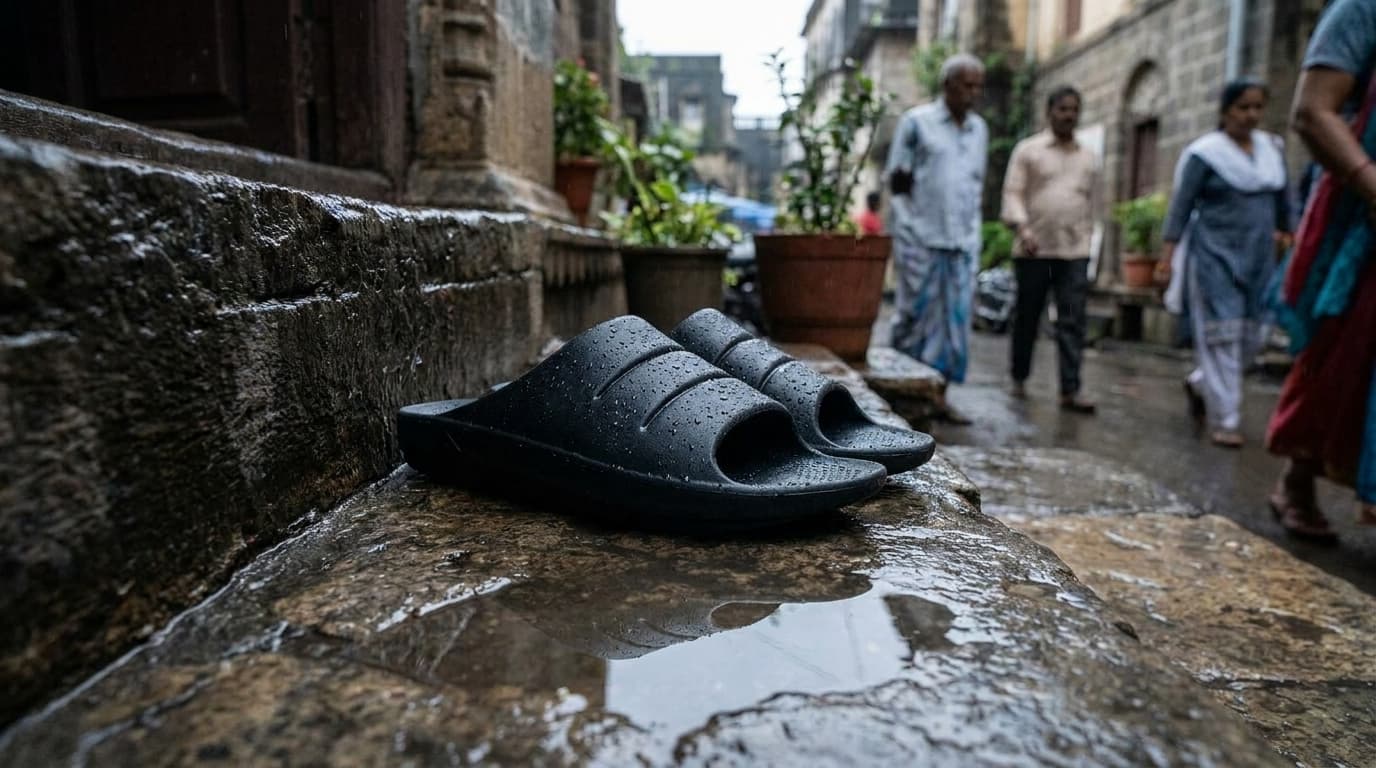
What foam and a cut tread actually do
Fused foam does not absorb water. There is nothing to soak, so there is nothing to dry out, nothing to hold odour and nothing to warp from being wet. You can walk through standing water and rinse the pair off at the door.
The outsole is a geometric non-slip pattern with channels cut through it so water runs off rather than staying between the sole and the floor. The closed style is drilled through the upper for the same reason, a spill or a puddle drains instead of pooling around the foot.
Weight matters more in the rain than people expect: a pair that is roughly 120 g per shoe at EU 42 does not get heavier when wet, because there is nothing in it to hold the water. A soaked canvas shoe can double.
The habit that ruins pairs in July
The rain stops, the sun comes out for an hour, and the obvious move is to put the wet pair on the terrace. That hour is the one that damages the foam. Direct sun shrinks the surface faster than the core, the sole curls, and the footbed loses the contour that made it worth buying.
It is a monsoon-specific trap because the sun feels like a resource when everything is damp. Dry indoors with air moving instead. They are quick-drying, the sun is not saving you meaningful time, it is only adding risk. Heat damage is not covered by returns, which is precisely why this paragraph is here and not in a footnote.
Which shape for a wet season
Open shapes are the classic monsoon pick because there is less to get wet and a rinse takes seconds. A slide or a flip flop, shaken once and left indoors, is dry before you have finished making tea.
The closed clog keeps more of your foot out of the splash and is just as waterproof, with drainage through the upper so it does not become a bucket. It is the better choice if your monsoon involves standing in a place where things get spilled, and the worse choice if it involves heat.
Whichever you pick, the waterproofing and the tread are identical across the range, so this is a coverage decision rather than a performance one.
Where this guide stops
There is no slip-resistance rating on this footwear, and we are not going to describe the tread in language that implies one. It is designed for wet floors; it is not certified for them. On polished marble in a lobby, or anywhere your workplace specifies rated footwear, take the care you would take in any shoe and follow the rule your workplace sets.
CloudFoam™ is heat-sensitive, keep every pair out of direct sunlight and off hot surfaces, and store it in the shade. Sun or heat damage isn't covered by returns.


