
- 01EVA foam is light, cushioned and does not absorb water. Rubber is heavier, firmer and tougher.
- 02Fusing foam into granules rather than cutting it from a sheet is what keeps a sole springy for longer.
- 03Rubber tolerates heat. Our foam does not, and that is the trade we accepted.
Two slides on a shelf can look nearly identical and feel completely different a month later, and the material is almost always why. The divide in casual footwear is EVA foam against rubber. One is light and gives; the other is dense and lasts. Neither is better in the abstract, and this guide includes the part most brand-written comparisons leave out, the thing the material we did not choose does better than the one we did.
What EVA actually is
EVA, ethylene-vinyl acetate, is the light, springy foam behind most modern recovery slides and a good share of running-shoe midsoles. It is very light, it compresses under load, and it is closed-cell enough not to absorb water, which is why it took over comfort footwear.
Plain EVA has a known failure, though: it is one continuous material, and continuous material takes a set. Compress it for long enough and it stays compressed. That is the slide that felt wonderful in the shop and flat by the second month, and nothing about it looks different when it happens.
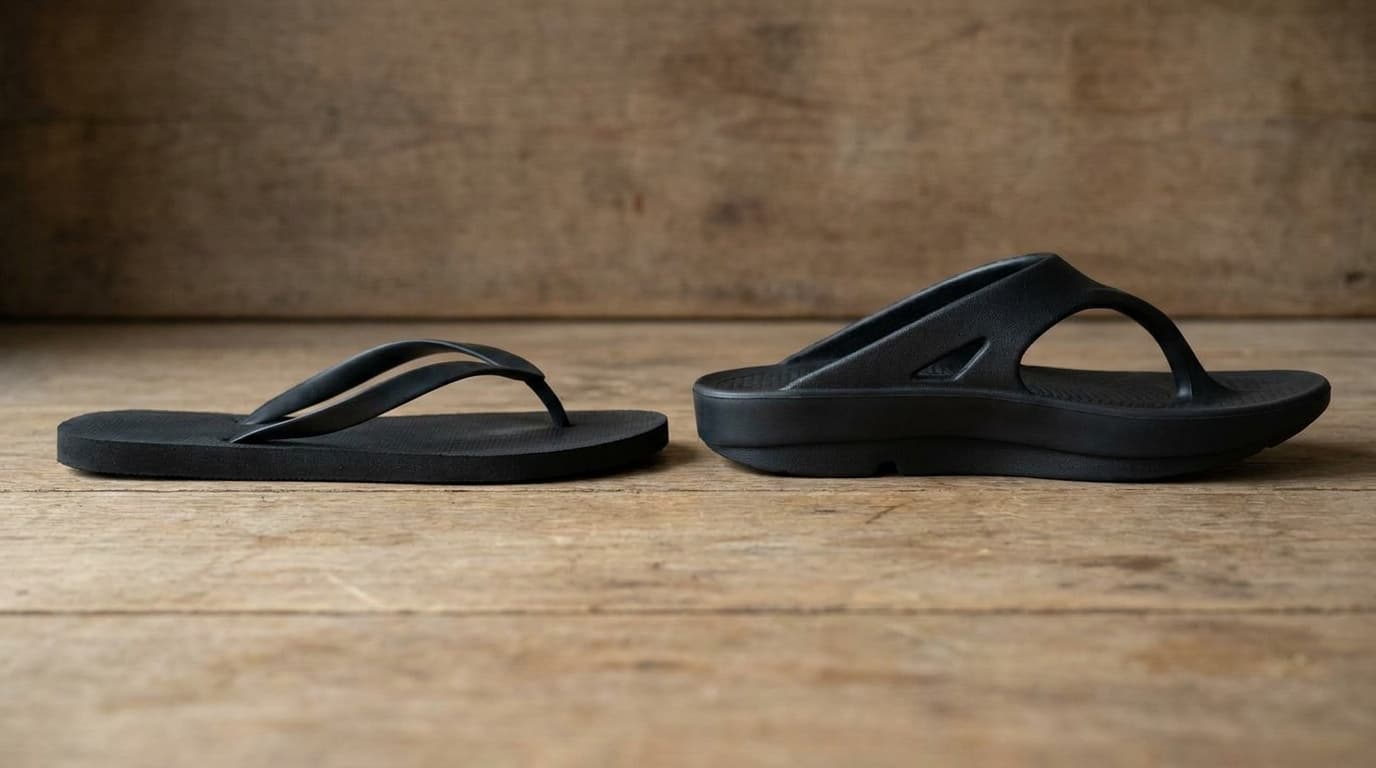
What fusing granules changes
The other way to make a sole is to expand the foam into granules first and then fuse them into the finished shape in a mould. Instead of one block you are standing on thousands of small ones. Each behaves like its own spring, and the boundaries between them give the material somewhere to deform into and a route back out.
That is what CloudFoam™ is, and it is also why the surface has a texture rather than being smooth, you feel it move under the foot as you walk. The practical claim is that it packs down more slowly than a cut slab. The claim we are not making is a number of months, because we have not measured one.
What rubber does better
Rubber is denser, heavier and far more abrasion-resistant. It grips, it wears slowly, and it is the reason outsoles have been made of it for a century. If toughness underfoot were the only thing that mattered, this would be a short argument and rubber would win it.
It also tolerates heat, which is the specific thing our material does not. A rubber flip flop left on a terrace in June is a rubber flip flop in July. That is a real advantage and we are not going to pretend it is not.
What it costs is weight and give. Rubber is much heavier over a day of lifting your shoes, and a solid rubber sole is firm, it does not have the compression that makes a recovery footbed feel the way it does.
The trade we made, stated plainly
Every Fanture style uses a fused-granule foam sole on a contoured footbed, because for footwear meant to be stood in the priorities are light weight, real give and being fully waterproof. Roughly 120 g per shoe at EU 42 is the weight we have measured.
You do not give up grip for it: the outsole is a geometric non-slip pattern with channels cut through so water escapes from under the sole rather than sitting there as a film. What you do give up is heat tolerance. Direct sun, a parked car, a heater or hot water can shrink or deform the foam, and that damage is not covered by returns.
That is the deal on the table, in both directions. If your footwear lives outdoors in the sun, buy rubber from somebody. If it lives indoors and you stand on it, the foam is the better material and the care rule is one habit.
Where this guide stops
We have not run abrasion or compression tests on either material, and we do not have a figure for how long a sole stays springy. The mechanism above is standard material behaviour rather than a measurement of our specific shoe, anyone quoting you a durability percentage for foam should be asked who measured it and on how many pairs.
CloudFoam™ is heat-sensitive, keep every pair out of direct sunlight and off hot surfaces, and store it in the shade. Sun or heat damage isn't covered by returns.


